
Specialized Cancer Centers
About the Center
- HOME
- Specialized Cancer Centers
- Gynecologic Cancer Center
- About the Center


Gynecologic Cancer Center, VHS Medical Center
The Gynecologic Cancer Center provides diagnosis and treatment for tumors of the female reproductive organs, including the uterus, ovaries, fallopian tubes, and vagina.
In South Korea, the most common gynecologic cancers are cervical cancer, endometrial cancer, ovarian cancer, and peritoneal cancer. In addition, there are rarer gynecologic tumors such as vulvar cancer, vaginal cancer, and choriocarcinoma.

Uterine Cancer
Cervical Cancer
Endometrial Cancer
Uterine Sarcoma
Vaginal Cancer
Vulvar Cancer
Ovarian and Peritoneal Cancer
Ovarian Cancer
Primary Fallopian Tube Cancer
Peritoneal Cancer
Mucinous Cystadenoma (Pseudomyxoma Peritonei)
Mesothelioma
Uterine Cancer Clinic, VHS Medical Center
Treatment Procedure
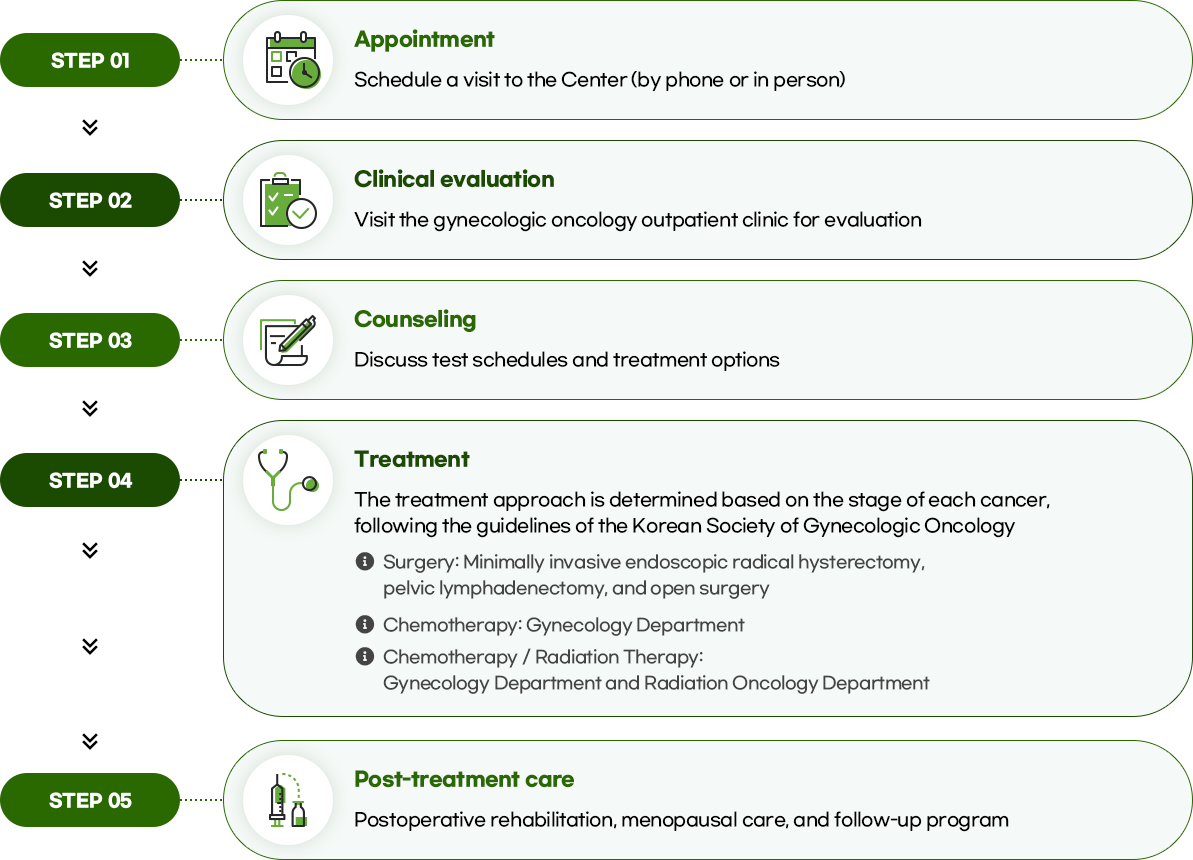
- STEP 01 AppointmentSchedule a visit to the Center (by phone or in person)
- STEP 02 Clinical EvaluationVisit the gynecologic oncology outpatient clinic for evaluation
- STEP 03 ConsultationDiscuss test schedules and treatment options
- STEP 04 TreatmentThe treatment approach is determined based on the stage of each cancer, following the guidelines of the Korean Society of Gynecologic Oncology.
ⓘ Surgery: Minimally invasive endoscopic radical hysterectomy, pelvic lymphadenectomy, and open surgery
ⓘ Chemotherapy: Provided by the Department of Gynecology
ⓘ Chemotherapy / Radiation Therapy: Provided by the Departments of Gynecology and Radiation Oncology
- STEP 05 Post-Treatment CarePostoperative rehabilitation, menopausal care, and follow-up programs
Gynecologic Cancer Clinic
Cervical Cancer
treatment varies according to disease stage, from fertility-preserving surgery that excises only the affected tissue to extensive laparoscopic hysterectomy. Advanced cases may be treated with radiation therapy, often combined with chemotherapy. Each case is carefully evaluated by a multidisciplinary team comprising specialists in Gynecology, Hematology & Medical Oncology, Radiation Oncology, Radiology, Nuclear Medicine, Pathology, and Oncology Nursing, ensuring that every patient receives the most appropriate, individualized care. Regular case conferences are also conducted to review patients’ initial diagnoses, determine optimal treatment strategies, assess treatment outcomes, monitor for recurrence, and manage recurrent disease.
Ovarian and Peritoneal Cancer Clinic
Our clinic provides treatment for ovarian cancer, primary fallopian tube cancer, peritoneal cancer of unknown origin (when other intra-abdominal primary cancers cannot be identified), and peritoneal dissemination resulting from pseudomyxoma peritonei.
Peritoneal cancer can originate from various intra-abdominal organs, including the ovaries, stomach, colon, and pancreas. Patients with peritoneal cancer whose primary organ has already been identified are referred to the respective organ-specific center. However, patients whose primary cancer site has not been identified can register at the Peritoneal Cancer Clinic, where they undergo evaluation and are referred to the appropriate organ-specific center once the primary lesion is confirmed.
Among peritoneal cancers, ovarian cancer, primary fallopian tube cancer, peritoneal cancer (pseudomyxoma peritonei), and mesothelioma are often accompanied by peritoneal metastasis at the time of diagnosis. However, by performing cytoreductive surgery—an operation aimed at removing as much of the tumor as possible—treatment outcomes can be maximized.
Chemotherapy is administered either as neoadjuvant therapy before surgery or as adjuvant therapy after surgery, depending on the stage of the disease.
Treatment Procedure
The Ovarian and Peritoneal Cancer Clinic at the VHS Medical Center offers prompt medical services by streamlining the entire process—from consultation and examination to hospitalization and treatment—beginning with the patient’s first visit.
Multidisciplinary Approach
Each patient’s case is thoroughly reviewed through multidisciplinary discussions involving specialists from Gynecology, Surgery, Radiation Oncology, Radiology, Nuclear Medicine, Pathology, and Oncology Nursing, to provide the most optimized treatment plan based on the specific disease condition. Regular case conferences are also conducted to review patients’ initial diagnoses, determine optimal treatment strategies, assess treatment outcomes, monitor for recurrence, and manage recurrent disease.



You can view all family sites affiliated with the Korea Veterans Health Service.

Korea Veterans Health Service (KVHS)
Go to WebsiteVHS Medical Cente
Go to WebsiteVHS Busan Hospital
Go to WebsiteVHS Gwangju Hospital
Go to WebsiteVHS Daegu Hospital
Go to WebsiteVHS Daejeon Hospital
Go to WebsiteVHS Incheon Hospital
Go to Website